
Indoor Air Quality Guide
Call Us Now (214) 886-3108
Home › What’s in the Air Inside Your Home? Indoor Air Quality Guide
What Affects the Air Quality Inside Your Home?
A home can look perfectly clean and still have air quality problems that no one in the house can see or smell. After a residential indoor air quality inspection, you may be surprised by the hidden pollutants that can be found throughout your home. With more than 1,000 inspections completed since 2019, Barrett Environmental has seen just how much can go unnoticed in the air of a North Texas home. In response, we’ve put together a free resource for homeowners.

Download Our Guide to Common Indoor Air Pollutants
Our downloadable guide outlines all the common pollutants found in many kitchens, bathrooms, bedrooms and other areas of the home. In just a few minutes you’ll know where these pollutants like nitrogen dioxide and carbon monoxide may be found, along with their sources. When left unresolved, these pollutants can affect your health, comfort and everyday life at home. You can start learning by downloading the guide at the link below, and you can share it with friends and family across social media.
When to Consider Indoor Air Quality Testing
After reading our guide to common indoor air quality problems found in homes, you may wonder whether your own property should be tested. Depending on your concerns, an assessment could include indoor air quality testing, mycotoxin sampling services or other professional testing options. Here are some of the main reasons you may need indoor air quality testing.
- Persistent or unexplained odors inside the home.
- Unexplained headaches, congestion or fatigue that ease up away from home.
- Recent leaks, flooding or other moisture problems.
- Visible mold or signs of previous mold growth.
- Recent renovations or new building materials like flooring, paint or cabinetry.
- Buying a home without a water damage or repair history.
- Unresolved concerns after mold remediation.
While these signs might suggest a problem with mold or indoor air quality, you’ll need professional testing to know for certain. As you will see in the guide, an indoor air quality assessment can tell you exactly what’s in your air and also identify the source.
What Happens During an Indoor Air Quality Assessment
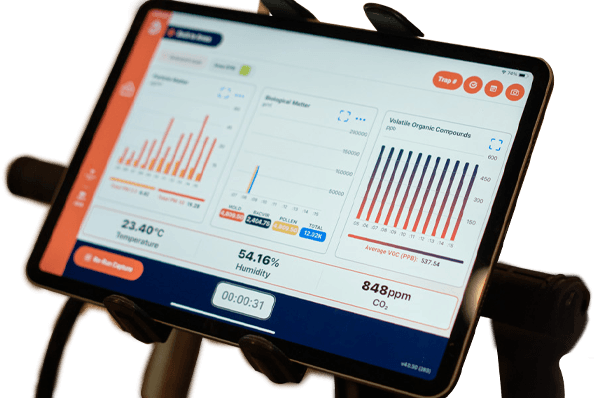
Before testing begins, homeowners or property managers can discuss any concerns they have that may have prompted the visit. Or if it’s a routine check, let the team know that too. The team visually assesses the home, examining factors like moisture, ventilation, and possible sources of contamination. Real-time air quality monitoring and airborne particle counters are then used to measure ventilation, humidity and particulates throughout the home.
Once collected, the data is reviewed and turned into an easy-to-follow report. Our reports are written in straightforward language, so property owners understand exactly what was found and what it means. Property owners can share this report with a remediation company when there are issues that need to be addressed. And after this work is complete, clients may request post-remediation verification to scientifically confirm that conditions have improved.
If you found our guide to common indoor air pollutants to be helpful, consider sharing it with other homeowners in North Texas. Because these pollutants can affect anyone, the more people that understand the signs of a potential air quality problem, the better. You can also find more answers in our mold testing and indoor air quality inspection FAQ.
Contact Us for an Indoor Air Quality Inspection in DFW
If you’re concerned about mold or pollutants in your home, speak with the specialists at Barrett Environmental. Our team provides mold testing and indoor air quality inspections at homes across North Texas. Call (214) 886-3108 or request an inspection.